We used to watch these shows and believe every gasp was real. Then Tom spent a summer editing corporate training videos and came home permanently unable to enjoy reality television the normal way. Carrie says that’s the least fun way to spend a Tuesday night, and she is right, but neither of us can stop pointing at the screen anymore.
This list rounds up twenty-seven of the editing tricks producers use to turn ordinary footage into unshakeable drama, counted down to the one that changes how you watch everything, even the shows you still love.
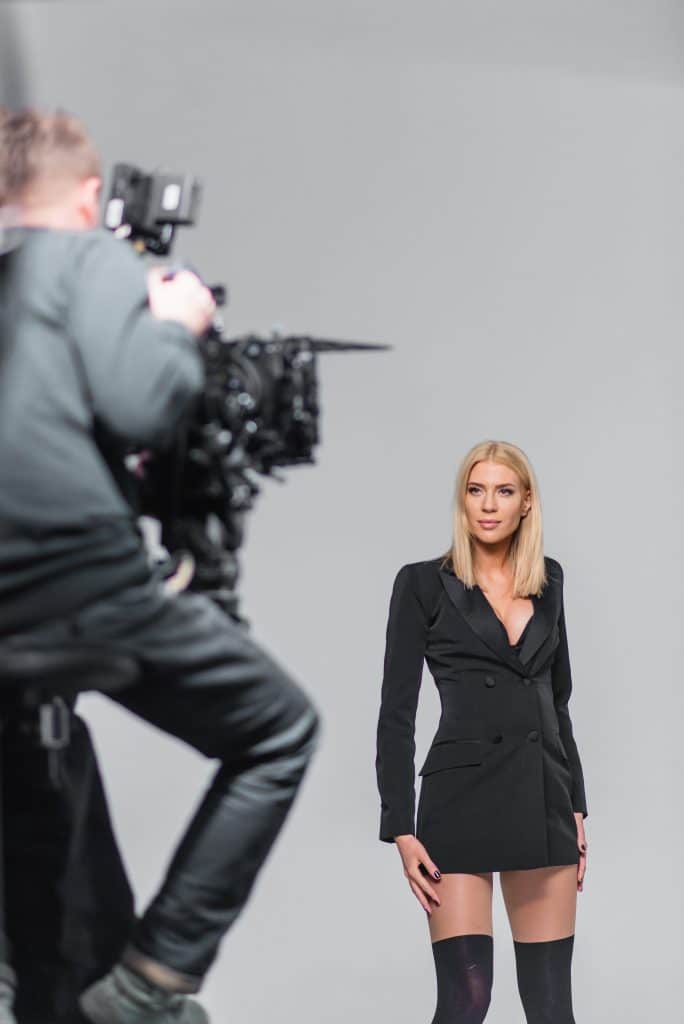
27. Recycled Establishing Shots
Every time a show cuts back from commercial, you get a wide shot of the house, the resort, or the warehouse before anyone speaks. That shot is not new footage. It is usually the same handful of clips filmed once during the first week and reused for the entire season.
Editors love it because it resets the viewer’s sense of place without spending a single extra minute of shoot time. You can sometimes spot it by the lighting staying suspiciously identical across episodes that supposedly happen weeks apart.
Some productions film a full library of these shots on day one, in every weather condition, just so editors have options no matter what the season looks like by the finale. It is one of the cheapest tricks on this list and also one of the most invisible, which is exactly why it survives in nearly every unscripted format.
26. The Blooper Reel That Hides the Real Bloopers
Bonus blooper segments feel like a peek behind the curtain. Mostly they are a curated distraction, a handful of harmless flubs released on purpose so nobody goes looking for the editing choices that actually shaped the episode.
A camera operator laughing on mic is charming and cheap to include. A contradicted timeline is not something any blooper reel is going to show you.
The genuinely interesting mistakes, the ones where a plot point falls apart on camera, get logged and filed away in an editing suite instead. Those never make it anywhere near a broadcast.
25. Crowd Reaction Shots Recycled From Other Moments
That gasping audience member reacting to the big reveal may have gasped at something else entirely, on a different night, for a different reason. Crowd footage is shot in bulk and banked for later.
It gets slotted in wherever the editor needs a face to sell the stakes. Watch closely across a season and you will start noticing the same three people reacting to everything.
Some productions even keep a running folder organized by expression: shocked, delighted, unimpressed. An editor can pull exactly the face a scene needs without ever pointing a camera at anyone that day.
24. The “We’ll Be Right Back” Tension Hold
Nothing has actually happened yet. Someone has just opened their mouth to speak. The show cuts to black anyway, because the pause itself is the product being sold to you.
It works because our brains hate an unfinished sentence more than they hate four minutes of advertising. Editors know this and use it constantly, sometimes twice in the same episode.
Producers even have a rough term for it internally: a false stinger. The scene that follows the break rarely delivers on the tension the cut promised, but by then the ads have already run.
23. The Days-Earlier Flashback Structure
A tense moment opens the episode, then a title card says “three days earlier” and rewinds the whole thing. It is a structure borrowed straight from crime dramas, and reality shows use it to manufacture stakes that the raw footage did not naturally have.
Once you know the trick, you can usually guess how the rewound stretch ends. The tension is less about what happens and more about how long the show can stretch the walk back to that opening moment.
The opening moment itself is often chosen after the whole episode is already cut. Editors go looking for the single most dramatic frame in the footage and build the flashback structure backward from there.
22. Overlapping Voiceover Narration
A calm narrator tells you exactly how to feel about a scene while it is still unfolding on screen. It sounds unnecessary until you realize how much work it is doing.
The narration decides which detail matters, which person is the underdog, and which small disagreement is secretly a turning point. Strip the voiceover out of most reality shows and entire storylines stop making sense.
Narration scripts are usually written after the footage is fully cut, not before. Writers sit in an edit bay watching the picture and building lines that fit the exact rhythm producers have already locked in.
21. The Raised Eyebrow, Held
A judge or host reacts to something, and the camera lingers on that face for two or three full seconds longer than any real conversation would allow. That extra beat is not natural human timing.
It is a held frame, sometimes from a completely different take, inserted to tell the audience this moment mattered before anyone has explained why. The eyebrow is doing narrative work the dialogue has not caught up to yet.
Wait until you see what happens by the time we hit the top seven. The tricks stop being subtle and start being almost mechanical.
20. Musical Stings That Map the Emotion Before You Feel It
A low string swell arrives half a beat before anything sad happens. A bright plink arrives before the joke lands. The music is not reacting to the scene, it is telling you how to react to the scene.
Composers build entire libraries of these stings specifically for reality shows, sorted by emotion rather than by song. An editor can search “betrayal, subtle” and get forty options within seconds.
Try muting a tense scene sometime and watching it cold. Most of the drama evaporates immediately, which tells you how much of the emotional labor was never coming from the picture at all.
19. The Storm’s Coming Cutaway
A quick shot of dark clouds or a flapping tent flag gets inserted into a scene that has nothing to do with weather. It reads as ominous without the show ever having to say what, specifically, is coming.
Half the time nothing does come. The clouds are from a totally different afternoon, filmed by a second unit whose entire job is collecting moody nothing-footage for exactly this purpose.
These stockpiled shots get labeled by mood rather than by date, so an editor searching for tension can pull up dark skies from months earlier without anyone questioning the timeline.
18. Interviews Filmed Weeks Later, Placed as if Concurrent
That confessional where someone explains exactly how they felt in the moment was very likely recorded well after the moment, once producers already knew how the story would be edited.
The wardrobe usually gives it away if you look closely, since a different shirt means a different day. The insight always sounds suspiciously well timed because it was built to fit the cut, not the other way around.
Some shows even schedule these follow-up interviews weeks into the future on purpose, once producers already have a rough sense of where the storyline is heading and what kind of reflection the edit will need.
17. The Countdown Clock That Serves No Purpose
A digital timer appears in the corner of the screen even when nothing in the actual task requires split-second precision. It is there purely so your eyes have something to watch tick down.
Competition shows especially love this one. Even a leisurely cooking segment gets a clock, because a visible countdown raises a viewer’s pulse regardless of what is actually at stake.
The clock rarely runs at real speed either. Editors will speed up or freeze the countdown graphic in post to match whatever pace the scene needs, independent of how long the task genuinely took.
16. The Single Tear, Zoomed
One tear appears, the camera pushes in slowly, and the moment gets replayed from a second angle just in case you missed how important it was. Tom thinks this is one of the most effective tricks in the whole playbook and defends it without shame.
Carrie thinks it is manipulative in the most obvious way possible and refuses to be moved by it on principle, which has not stopped her from getting misty at least twice on our couch.
15. The Finale Montage That Recaps a Season You Just Watched
Right before the final result, most shows pause for a full montage of everything that already happened, set to swelling music, as if the audience has forgotten the last six weeks.
It exists to manufacture one last wave of feeling before the outcome lands, and to stretch a fifteen-minute finale segment into something that fills its allotted broadcast hour.
14. Time Compression That Makes Months Look Like Days
A renovation that took four months on the actual property gets edited into what feels like a single busy week. Cuts between morning light and afternoon light do the heavy lifting here.
The compression is not dishonest exactly, it is just a completely different relationship with time than the people living through the project actually had. Nobody’s kitchen gets finished that fast, and everyone involved knows it.
By the time we get to the top half of this list, the tricks stop hiding in plain sight and start actively bending what actually happened. Number nine below is the one that gets us the most complaints from readers who insist it isn’t real.
13. The Cliffhanger Cut That Resolves Anticlimactically
The episode ends on someone’s shocked face and a title card promising everything changes next week. Next week, the actual resolution is often a single mild sentence delivered in about four seconds.
We will admit this one works on us anyway, every single time, even though we can see the seams. Knowing the trick and being immune to it turn out to be two very different things.
The verdict: effective, cheap, and completely shameless, in that order.
12. Repeating a Phrase Across Episodes to Build an Arc
Someone says one slightly loaded phrase in episode two, and the show quietly replays that same clip in episodes five, eight, and eleven, usually right before something related happens.
By the finale, that one offhand sentence has been recontextualized into a prophecy. It rarely was one at the time it was said, the editors just decided in hindsight that it should have been.
This is a technique borrowed from music, essentially a callback motif for people instead of melodies. The more times a line resurfaces, the more inevitable the eventual outcome feels once it finally arrives.
11. Elimination Order Rearranged for Suspense
The order in which results are revealed on screen is rarely the order in which they actually happened during filming. Producers hold back the outcome viewers care about most, regardless of when it occurred that night.
This is why a result can feel oddly delayed or strangely front-loaded. The broadcast order serves the story arc of the episode, not the literal chronology of the evening.
Some formats film results in one order and reveal them on camera in another entirely, using reaction shots and pickup interviews to smooth over the seams so nobody clocks the rearrangement.
10. Planted Conversation Topics Disguised as Organic
Producers often feed a topic to a cast member off camera, then let the cast member bring it up on camera as though it just occurred to them. It looks spontaneous because the delivery genuinely is.
The idea for the conversation, though, usually did not originate with the person having it. This is one of the harder tricks to spot, since nothing about the performance itself is faked, only the origin of the idea.
Producers sometimes call this steering rather than scripting, and the distinction matters more to them than it does to a viewer trying to figure out what was real. Either way, the conversation you watched had a co-author standing just out of frame.
9. The “In Case You Forgot” Recap After Every Break
Every act break gets its own thirty-second recap of what just happened thirty seconds ago. Viewers joke about this constantly, and honestly, it earns the mockery.
We will be honest with you: this one is not clever or sneaky, it is just padding, plain and simple. It exists to stretch a forty-minute episode into a full broadcast hour, and everyone involved knows it, including the audience.
The verdict: not manipulation, just runtime math.
8. Strategic Silence That Makes an Answer Look Damning
Someone gets asked a pointed question, pauses for a completely normal second to think, and the show holds on that pause a beat or two longer than the moment naturally lasted.
The extended silence reads as guilt, hesitation, or a confession about to happen. Sometimes the person genuinely was just thinking about what to order for lunch.
Editors will occasionally borrow a pause from an entirely different question and drop it under this one, since silence rarely has anything visually identifying about it that would give the swap away.
7. The Producer-Fed Question, Repeated Back as Spontaneous
An off-camera producer asks, “how did that make you feel when they said that,” and the cast member’s on-camera answer opens with a version of the same phrase, as though they arrived at the sentiment on their own.
This is standard documentary practice, not a scandal, but it does mean a lot of what sounds like a spontaneous emotional insight is really a guided response to a question the audience never hears.
Everything from here down starts touching the footage itself, not just how it’s framed. What’s at number two involves reshaping an entire person’s role in the show, and it’s rougher than most viewers assume.
6. Reaction Shots Filmed Separately and Inserted Later
The wide-eyed reaction to a shocking line was very possibly filmed after the fact, sometimes on an entirely different day, with the cast member reacting to a description of the moment rather than the moment itself.
Editors call these pickups, and every unscripted show relies on them. Without pickups, half the reactions you have ever watched simply would not exist in usable form.
Directors will sometimes describe the original moment out loud to the cast member, word for word, before rolling camera on the pickup. The reaction is genuine even though the trigger for it was secondhand.
5. Ominous Music Stings Right Before Every Commercial Break
The low, unresolved chord that plays right as the screen cuts to black is doing enormous work with almost no visual information behind it. It is the sound of a question mark.
Strip that sting out and replace it with silence, and the same footage suddenly feels flat and uneventful. The music is often carrying more dramatic weight than anything that was actually said.
Composers write these cues in short, loopable stretches specifically so editors can trim them to fit any length of pause, right down to the exact frame where the picture cuts to black.
4. Confessional Cutaways Inserted After the Fact
A scene plays out, then cuts to someone explaining their motivation in a private interview, then cuts back to the scene as if the explanation happened in real time. It almost never did.
This structure lets editors insert context, motive, or a completely different read on someone’s behavior after the footage was already shot. It is one of the single most powerful tools in the entire toolkit, because it changes meaning without changing a single frame of the original scene.
3. Manufactured Slow-Motion Drama Zoom
Ordinary footage gets slowed to roughly half speed and pushed into a slow zoom, and suddenly a mundane exchange feels like the most important thirty seconds of the entire episode.
The trick works on almost anyone, which is exactly why it shows up so often. Slow motion tells your brain “this matters” before you have consciously decided whether it actually does.
It gets used so liberally that some editors joke about a house rule limiting how many times it can appear per episode, precisely because overuse trains the audience to stop trusting it as a signal at all.
2. The Villain Edit, Built From Selective Clip Choice
Out of hundreds of hours of footage, an editor selects the handful of clips where one cast member looks their least sympathetic, cuts them together, and lets the pattern do the rest of the storytelling.
Myth: editors invent a villain out of nothing, scripting behavior that never happened.
Reality: in most cases the moments genuinely happened. What changes is the ratio, since a person’s worst three minutes across two months of filming get promoted to their defining trait, while their better hours quietly hit the cutting room floor.
1. Frankenbiting: Splicing Separate Sentences Into One Fake Quote
This is the one that changed how we watch everything, and it is the most disputed trick in the entire industry for a reason. Frankenbiting takes individual words or short phrases from completely different moments, sometimes minutes or even days apart, and stitches them together into a sentence the person never actually said.
Done well, it is undetectable to the ear. A person’s real voice, their real cadence, and their real words all end up combined into a statement that exists nowhere in the original footage, built entirely in the edit bay from raw material the cast member did provide, just never in that order and never about that topic.
Editors defend the practice as reconstructing what someone “really meant,” which is generous phrasing for rewriting what someone actually said. Networks rarely comment on it directly, and cast members who suspect it happened to them usually have no real way to prove it after the fact, since the raw footage is almost never released.
Once you know frankenbiting exists, you cannot fully unknow it. Every clean, quotable soundbite on every reality show starts to look a little too clean, a little too quotable, a little too perfectly shaped for the story the editors were already trying to tell. That is the real cost of this list: not that reality television is fake exactly, but that “real” was always doing more editorial work than any of us gave it credit for.
What We Notice Now
None of this means the shows aren’t worth watching. It means the drama you are responding to was assembled, choice by choice, by people whose entire job is making you feel something on schedule.
We still watch these shows most weeks, editing tricks and all, because knowing how a magic trick works rarely ruins the magic show. It just means you start applauding the right person.
If anything, spotting the seams has made us better viewers, not worse ones. We just watch two shows at once now, the one on screen and the one happening in the edit bay behind it.
Next time something on screen makes your stomach drop or your eyes sting, it’s worth a half-second pause to ask what music just played, what shot just held a beat too long, and what silence just got stretched a little further than it should have. The trick is usually right there in plain sight.